Monday, January 10, 2005
Tuesday, January 04, 2005
Music 2004
Since it's a new year finally I figured it was time to clear off the sidebars. I'll leave the films up for a little while longer, at least until I see a few more movies; mainly Million Dollar Baby, House of Flying Daggers, and Time of the Wolf, and probably a few others. (I have a deep suspicion that Goodbye Dragon Inn will eventually be my favorite movie of the year, but I haven't seen it yet and probably won't for some time.)
But I can at least write a little about my music choices. I am a complete amateur with music so expect some malapropism, errors in judgment, and just plain ignorance.
I ventured pretty deeply into psychedelic music this year (as I did last year), finding much satisfaction in impossibly dense soundscapes, blistering electric guitar solos, and long form meditative mantras. So it seems pretty obvious that The Neck's Drive-by and Houston natives Charalambides' Joy Shapes both deserve to be album of the year for me.
Describing Drive-by is easily beyond my musical vocabulary, but I'll try. Much like previous albums by this jazz group, it's one long piece, about 63 minutes (and also like their other albums the last ten minutes are a bit of a snore--they seem to feel the same need to wind down as they do to wind up). An absolutely gorgeous series of chords from a piano pop up every now and then, but the real attraction here is the drums and bass, which combine to create what is a truly trance inducing effect, a rhythm that never ceases to be seductively beautiful and addictive. Best part occurs late in the game, where everything drops out but the drums, casting the listener into a primal relationship with the reverberations, movement, space, and even a physical sense of pleasure. Give it time and space.
Joy Shapes, is fittingly 180 degrees away from Drive-by. There is no rhythm to speak of, just airy (and often spooky) guitar jangling that melts and melds dissonance into some beautiful forms of harmony. The singing will put you off at first, but learn to treat it as an intstrument and it fits perfectly. Seemingly celestial, it offers a great counterpart to the earthy sensuality of The Necks.
Boredoms, Seadrum/House of Sun: my favorite band returns with what is hopefully just a teaster. The second track (out of two) is a very pretty siter vs. guitar showdown, but the first track is pretty unique. Yoshimi keens beautifully for a few minutes before a percussion rises up like the tide all around her (hence the name of the song I guess). Eventually piano keys rain down on your head so fast it's like sensory overload. Absolutely stunning and beautiful, if exhausting.
Otomo Yoshihide's New Jazz Quintet's Tail's Out is probably not a major album for free jazz aficionados, but this dilettante loved it. Yoshihide brings a real rock (almost metal!) sensibility to the louder pieces. Check out the drums at the end of the second track and the hilariously obnoxious rendering of Strawberry Fields Forever that never fails to make me laugh. The final two tracks, a beautiful rendering of a jazz classic complete with ear splitting sine-waves that morphs into a form of music the Japanese call onkyo, which as far as I can tell tries to create shifting sound sensations and colors rather than situating itself around a firm rhythm or melody--it goes for pure sound and it's absolutely hold-your-breath-or-it-will-fly-away gorgeous.
Camera Obscura, Underachievers Please Try Harder: just plain and pretty pop music in the mould of Belle and Sebastian, but a lot better for my money. The singer can be a little to fey and coy, but she often reaches for beautiful intimacy and gets it.
Finaly, Comets on Fire make it for basically creating one of the greatest rock songs of all time on Blue Cathedral--an old school hard rock meets pysch album that isn't nearly long enough for me. Great fun.
Puffy AmyYumi, Hi Hi Puffy AmiYumi Show Soundtrack: Basically a greatest hits compilation. Flawless and exhilarating power pop. I just got their album Nice from last year and it's perfect as well. Don't deny yourself something this great! (The cartoon ain't bad either!)
Best of the rest:
The Streets, A Grand Don't Come for Free: Great for it's determined commitment to the mundane.
Bjork, Medulla: a minor work, for sure. Some gorgeous bits though, and deceivingly complex.
Espers, Espers: 60s style haunted folk-psych.
Mara Carlyle, The Lovely: kind of a lovely chamber piece. Fantastic singer.
OOIOO, Kila Kila Kila: wildly underrated. Probably seems a bit sparse and even empty to some, but for lovers of Yoshimi & Yuka's Flower with no Color, it's the next logical step. Yoshimi's penchant for interesting sounds over songcraft may annoy some (and she may never top her masterpiece Green & Gold) but if you have the patience there are a lot of rewards to be found here.
Annie, Anniemal: fantastic europop. If you don't like this you are dead inside.
Lot's of other great stuff out there, of course. (I just remembered Yuka Honda's great new album, for instance.) Not a great year for music overall, however. I spent much of the year in the 70s myself (Popol Vuh, anyone?). Looking forward to a new Kate Bush album next year, as well as The Avalanches and Daft Punk.
2046
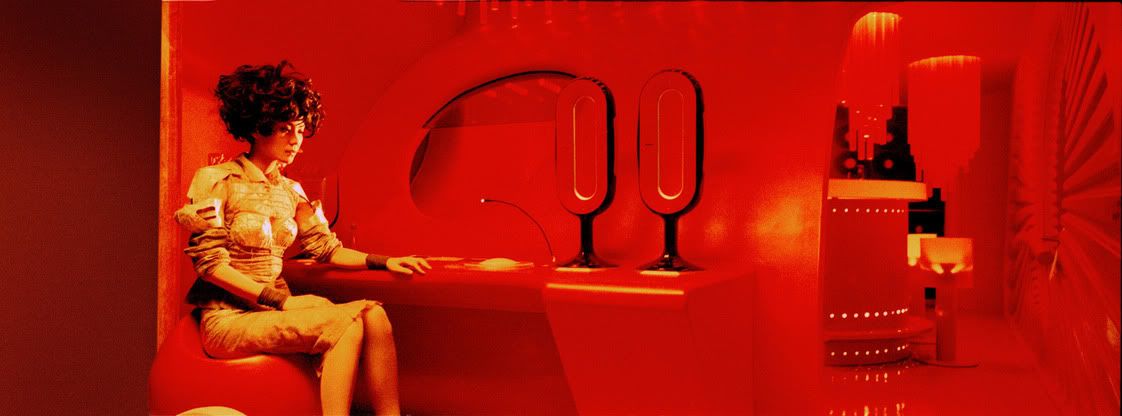
I have only seen an unofficial copy of this so far, and I can tell the usual Wong Kar-wai style vibrant colors are washed out a bit. I can picture how it is supposed to look at times, such as when Faye Wong (who, it must be said, looks insanely gorgeous in this movie) stands in a green dress in front of green bottles I imagine the sensuousness of the color is overwhelming. But on my copy at the moment it's just a bit faded. Thus watching the movie is a bit of a strain rather than the swoon I imagine it is supposed to be. So I will only say a few words for now.
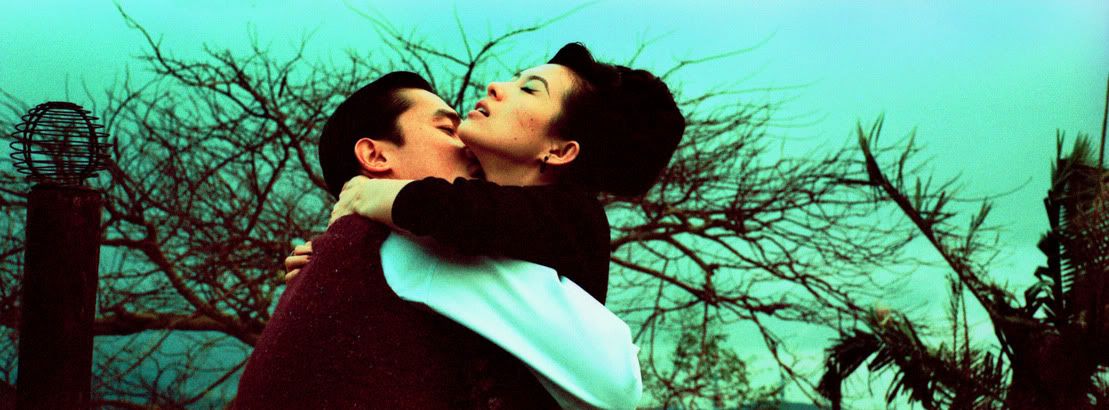
Time and love are again the themes, just as in In the Mood for Love. This one is more about memory, time lost rather than time slipping away. The final scenes of In the Mood for Love represent a form of monument building, secrets kept eternally. 2046, then, continues to explore the reverberations of that act which solidifies the past into a personal monument, draining the present of all meaning and satisfaction. The ironic meaning of the science fiction elements show that the pursuit of the future is a displaced longing for the past. 2046 is the place where "nothing ever changes." Key line: "Why can't it be like it was before?" Where In the Mood for Love was romantic, sumptuous, perfect, 2046 wanders in a melancholy haze, imperfect, incomplete, the failure of consummation portrayed at the end of the first film is given its full weight here. Longing turns to hollow pleasures. Time moves on. Quietly devastating.
I have only seen an unofficial copy of this so far, and I can tell the usual Wong Kar-wai style vibrant colors are washed out a bit. I can picture how it is supposed to look at times, such as when Faye Wong (who, it must be said, looks insanely gorgeous in this movie) stands in a green dress in front of green bottles I imagine the sensuousness of the color is overwhelming. But on my copy at the moment it's just a bit faded. Thus watching the movie is a bit of a strain rather than the swoon I imagine it is supposed to be. So I will only say a few words for now.
Time and love are again the themes, just as in In the Mood for Love. This one is more about memory, time lost rather than time slipping away. The final scenes of In the Mood for Love represent a form of monument building, secrets kept eternally. 2046, then, continues to explore the reverberations of that act which solidifies the past into a personal monument, draining the present of all meaning and satisfaction. The ironic meaning of the science fiction elements show that the pursuit of the future is a displaced longing for the past. 2046 is the place where "nothing ever changes." Key line: "Why can't it be like it was before?" Where In the Mood for Love was romantic, sumptuous, perfect, 2046 wanders in a melancholy haze, imperfect, incomplete, the failure of consummation portrayed at the end of the first film is given its full weight here. Longing turns to hollow pleasures. Time moves on. Quietly devastating.
Wednesday, December 15, 2004
"But it was not a star, it was falling, a bright angel of death"
--Gravity's Rainbow
I think this line does a nice job of summing up the terrifying reversal (indeed, the arc of gravity's rainbow itself) that the novel seems to be about. What if our greatest hopes, dreams, and desires are merely the masks of a death wish? Is there a way out? Hopefully I'll be able to post more on this later...(finals week)
Tuesday, December 07, 2004
Saturday, December 04, 2004
Schopenhauer, 1823:
If at times I have felt unhappy, then this has been largely due to a mistaken identity: on those occasions I regarded myself as someone other than who I am, and lamented that person's misfortune: e.g. a Privatdozent who is not made a professor and has no audience, or one of whom a philistine here speaks ill or a gossip there talks scandal, or the defendent in that bodily injury suit, or the lover whom the girl he particularly wants rejects, or the patient housebound by his illness...I was not any of these, all this is alien material from which, at best, the coat was made which I wore for a while and then took off in favour of another. But who am I really? He who wrote the World as Will and Representation...That is who I am, and what could challenge that man in the years he still draws breath?Try to look past, if you can, the burst of ego at the end of this quote, and see through to the necessity of it represented in the catalog of misfortunes that he recalls so easily and declares to be so illusory. This is not me, this isn't happening. This suffering, this illness, this need to be recognized is not me, for I am something else, something I can be proud of.
Wednesday, December 01, 2004
Here is a interesting interview with Philip Roth. It's of limited interest overall, but the series of comments Roth makes toward the end are most important:
JEFFREY BROWN: Some years ago, I know you were involved with Eastern European writers at a time when they were a kind of moral voice against a totalitarian society. What do you see as your role, or as the role of a writer in our society?Passing, mortality, finitude. All a shame. And it's precisely this notion of it being a shame, something to be regretted but not avoided that, inevitably links mortality to pessimism in my mind. I keep coming back in my own mind to Socrates' comment that philosophy is the art of learning how to die. I can think of no more pressing concern. And if metaphysics, an act of forgetting in the Heideggerian sense, is also the forgetting of the knowledge of how to die, the we can only come back to Being only through our mortality. But the question that haunts me still: how do I accept my death while not accepting it so much that I cannot get out of bed? How do I, as it were, navigate between the Will to Power and the Denial of the Will? In some ways I think philosophy has no more important business than this question, one which must be continually re-negotiated.
PHILIP ROTH: Your role is to write as well as you can. You're not advancing social causes as far as I'm concerned. You're not addressing social problems.
What you're advancing is... there's only one cause you're advancing; that's the cause of literature, which is one of the great lost human causes. So you do your bit, you do your bit for fiction, for the novel.
JEFFREY BROWN: Why do you think it's become one of the great lost causes of our time?
PHILIP ROTH: My goodness. Um, oh, I don't think in twenty or twenty-five years people will read these things at all.
JEFFREY BROWN: Not at all?
PHILIP ROTH: Not at all. I think it's inevitable. I think the... there are other things for people to do, other ways for them to be occupied, other ways for them to be imaginatively engaged, that are I think probably far more compelling than the novel. So I think the novel's day has come and gone, really.
JEFFREY BROWN: I would imagine you would think this is a great loss for society.
PHILIP ROTH: Yes, I do. There's a lot of brilliance locked up in all those books in the library. There's a lot of human understanding. There's a lot of language. There's a lot of imaginative genius. So, yes, it's a great shame.
JEFFREY BROWN: And what happens for you?
PHILIP ROTH: Me?
JEFFREY BROWN: You.
PHILIP ROTH: (Laughs) I'm going to keep doing it. I'll keep doing it, stubbornly.
Saturday, November 27, 2004
The great Simon Critchley says everything I ever wanted to say about The Thin Red Line. Even though he makes a very easy and common mistake: the vast majority of the voiceovers in the film are from a character we actually see very little of, and not Witt, as most critics think. I think this doesn't really matter so much, because the voiceovers are meant, I believe, to run together in this way like a chorus in Greek tragedy. I especially like Critchley's emphasis on the unresolved metaphysical debate at the heart of the film--which seems to bypass most people completely, who seem to think the movie is endorsing some sort of pantheism.
Tuesday, November 23, 2004
Anaximander and the Ontological Difference
Perhaps the earliest surving fragment in the history of philosophy is Anaximander's sentence:
I came across this while reading Vattimo on Heidegger. It is of particular importance for Heidegger's notion of overcoming metaphysics, which is also strongly tied towards being-towards-death and finitude as they are first expressed in Being and Time. It is an extraordinary fragment, extraordinary poetry really, and it is extremely difficult to make out the meaning of it. What is the crime? It would seem it is the "event" of my being, my singularity which only arises from the consideration of my death, that which Derrida notes in The Gift of Death is mine alone, the very thing which makes me "irreplaceable." My finitude is the condition for individuation (here I must say that Schopenhauer noted this in his way) and we might say that for Heidegger, and Vattimo, the "forgetting of Being" that takes place in metaphysics, the conflation of the ideal and the real, the ignoring of the ontological difference (the difference between Being and beings), is precisely tied to this notion of a crime: my Being in place of something else; the tying together of my being with Being, and therefore the origin of the idea of immortality.
As Derrida notes, to accept one's death, to give it and to be given it by God (Being), that which is not me, is to take on responsibility for the crime of being.
Note: This post hopefully explains to some extent my undoubtedly bizarre affection for Schopehauer. I see him as a thinker who went some way towards a rigorous distinction between Being and beings, someone who strenously observed the ontological difference. The problem is, if the distinction is rigorous it completely devalues beings (value is a function of Being). To completely devalue beings seems to me to be possiblly another metaphysical error, though a very odd one. This is, however, the opportunity I see in Schopenhauer.
For us ordinary mortals, Schopenhauer included, if not Jesus and Buddha (and Zarathustra?), this clear distinction is impossible. As Cioran said, "God is, even if he isn't." We have to live in the "interval," as Vattimo puts it, between Being and beings. We have to try, as Nietzsche wrote, to know that I dream and that I must dream. The gift of death, as Derrida sees it, seems to enable this.
It should also, finally, be noted that the terms Being and Nothing are interchangeable. It is beings that must vacillate between themselves and Being, their negation. To be or not to be. So in that spirit I will close this out with Hamlet's extraordinary meditation on his own death. Where else to end but Shakespeare?
Perhaps the earliest surving fragment in the history of philosophy is Anaximander's sentence:
Whence things have their origin,More here, if you are interested.
Thence also their destruction happens,
As is the order of things;
For they execute the sentence upon one another
- The condemnation for the crime -
In conformity with the ordinance of Time.
I came across this while reading Vattimo on Heidegger. It is of particular importance for Heidegger's notion of overcoming metaphysics, which is also strongly tied towards being-towards-death and finitude as they are first expressed in Being and Time. It is an extraordinary fragment, extraordinary poetry really, and it is extremely difficult to make out the meaning of it. What is the crime? It would seem it is the "event" of my being, my singularity which only arises from the consideration of my death, that which Derrida notes in The Gift of Death is mine alone, the very thing which makes me "irreplaceable." My finitude is the condition for individuation (here I must say that Schopenhauer noted this in his way) and we might say that for Heidegger, and Vattimo, the "forgetting of Being" that takes place in metaphysics, the conflation of the ideal and the real, the ignoring of the ontological difference (the difference between Being and beings), is precisely tied to this notion of a crime: my Being in place of something else; the tying together of my being with Being, and therefore the origin of the idea of immortality.
As Derrida notes, to accept one's death, to give it and to be given it by God (Being), that which is not me, is to take on responsibility for the crime of being.
Note: This post hopefully explains to some extent my undoubtedly bizarre affection for Schopehauer. I see him as a thinker who went some way towards a rigorous distinction between Being and beings, someone who strenously observed the ontological difference. The problem is, if the distinction is rigorous it completely devalues beings (value is a function of Being). To completely devalue beings seems to me to be possiblly another metaphysical error, though a very odd one. This is, however, the opportunity I see in Schopenhauer.
For us ordinary mortals, Schopenhauer included, if not Jesus and Buddha (and Zarathustra?), this clear distinction is impossible. As Cioran said, "God is, even if he isn't." We have to live in the "interval," as Vattimo puts it, between Being and beings. We have to try, as Nietzsche wrote, to know that I dream and that I must dream. The gift of death, as Derrida sees it, seems to enable this.
It should also, finally, be noted that the terms Being and Nothing are interchangeable. It is beings that must vacillate between themselves and Being, their negation. To be or not to be. So in that spirit I will close this out with Hamlet's extraordinary meditation on his own death. Where else to end but Shakespeare?
If it be now, 'tis not to come; if it be not to come, it will be now; if it be not now, yet it will come: the readiness is all: since no man has aught of what he leaves, what is't to leave betimes? Let be.
Wednesday, September 22, 2004
Friday, September 17, 2004
Rabbit, Run by John Updike
Should I admire Rabbit Angstrom? I must admit that I do, whether I should or not. He has known grace, and will not settle for anything less. We all must settle into the despair of everyday life, yet Rabbit foolishly and selfishly keeps running; running across a field of death in the cemetery, pursued by moral obligation in the form of a minister. Rabbit gets away, and for this I admire him, though I probably should not. I know he will keep running and never find what he wants, but I still admire him for whatever it is that makes him run and hurt those that love him and need him, even though I most definitely should not. I hope he keeps running.
Destiny runs throughout the novel: a man on television tells us, “Know Thyself.” Everyone is made for something, and fulfillment lies in discovering this quality and becoming what one already is. “Learn to understand your talents, and then work to develop them. That’s the way to be happy.” Rabbit, as Eccles rightfully points out, “has been spoiled by his athletic success,” and cannot reconcile the beautiful harmony of basketball with mundane messiness of a drunken wife and a shit job. It’s not right. It’s missing something. In a wonderful scene only a golf lover could write Eccles taunts Harry with the indefinable nature of the object of his quest: “What is it? What is it? Is it hard or soft? Harry. Is it blue? Is it red? Does it have polka dots?” Rabbit backs down for a moment but later hits an improbably beautiful golf shot, and says triumphantly, “That’s it!” And so it is. Updike lets him have the final word.
Invariably, Rabbit’s quest for it causes immense suffering, and Updike piles such guilt upon Rabbit that his ability to free himself from it at the end of the novel makes for an ambiguously moving moment. What a horrible and ugly and selfish thing Rabbit does, when he turns to his wife and blames her while absolving himself, but what a beautiful determination to escape the trap that has been set for him! I feel that the ugly/ beautiful moment of Rabbit’s escape perhaps acts out one of the main concerns of Updike’s novel. Rabbit uses people, he’s “bad news” as Ruth tells him, he is childish and selfish, stuck in former athletic glory days, irresponsible, and even a bit of a prick. Rabbit himself admits, “If you have the guts to be yourself, other people’ll pay the price.” But in order to condemn Rabbit’s behavior I have to condemn that from which it springs: the “excess of feeling” that Eccles diagnoses, the instinct that doesn’t let him give up, as Ruth notes. The question is of the nature of Rabbit’s essential character, and it would take someone sterner than I to mark it as an evil one.
Instead, I find Rabbit’s nature to be beautiful, despite the suffering it causes. I believe Rabbit is the tragic hero of this novel because of his refusal, perhaps even his inability, to stay in the trap that moral obligation sets for him, the same moral obligations that protect the rest of us. When back with Janice and Nelson, Rabbit “feels the truth: the thing that has left his life has left irrevocably; no search would recover it.” The rejection of this truth, Rabbit’s mad dash away from the inescapable, is as heroic as it is morally despicable. Perhaps Updike’s insight is that the heroic and the moral are not compatible in a world of suffering.
I rather doubt Rabbit finds happiness in his life, and I suspect his will is eventually run down. No one can run forever. We all get old and tired. The tragedy of the novel is not just Rabbit’s decision to run out on his family and the suffering it causes, but the fact of the inescapable despair that he runs from. Life is too painful and I am too disillusioned to think running out on my obligations will accomplish anything. We must stay resigned. Let Rabbit run.
Thursday, September 16, 2004
"Sorrow comes in great waves—no one can know that better than you—but it rolls over us, and though it may almost smother us it leaves us on the spot, and we know that if it is strong we are stronger, inasmuch as it passes and we remain. It wears us, uses us, but we wear it and use it in return; and it is blind, whereas we after a manner see."
Henry James, letter to Grace Norton, July 28, 1883
Henry James, letter to Grace Norton, July 28, 1883
Thursday, August 05, 2004
The Leopard
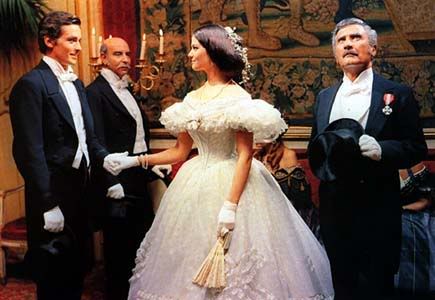
It's difficult for me to really express why I admired this film so much. There is of course the amazing cast: Burt Lancaster, Alain Delon, Claudia Cardinale (appearing here the same year as her memorable performance in 8 1/2, talk about a good year!), and even real Sicilian royalty in the breathtaking 45 minute final scene. There is the graceful and beautiful imagery. Visconti nevers cuts for the sake of cutting, and often he lingers over a shot that only reveals its beauty and meaning over time. He gives us time to think, and to explore the image for ourselves.
So the film is formally a masterpiece, but what makes it even more special is the restrained and melancholy story it tells, one conveyed through small gestures and unspoken thoughts. A scene near the end of the film shows a few couples dancing away the final hours of a Ball as the sun rises. Trash covers the floor and the other Ball-goers doze on couches. There is a dying, fading glow to the Ball's dawn conclusion, acknowledging that the arrival of a new age entails the sad and slow death of another one. Lancaster, the titular "Leopard", the representative of a now defunct nobility, is spared the indignity of a death scene. He walks out of history under his own power.
And history goes on without him. This film remembers.
Saturday, July 31, 2004
Dread
In Gulliver's Travels, Jonathan Swift imagines a race of beings who are immortal. Gulliver is astonished to hear this news, and imagines that they must have the utmost happiness and prosperity since they have overcome that most basic human problem: death.
Swift reverses this formula however: the life of the immortals is one of continual agony, pettiness, and boredom. To cut to the chase, Swift's essential insight is that death is not the problem, life is. (This is why, in a recent examination, I attempted to argue that, along with 1984, Gulliver's Travels is a fundamental anti-utopian text. That is to say that these texts are not dystopias warning of some nightmare version of the future, but instead they represent a reproach to the very idea of utopia. Swift's indictment of existence is but one aspect of his attack on those who would propose utopian solutions, but it is the bedrock that supports all the rest.)
A common thread to many of the thinkers I regard highly (Cioran, Schopenhauer, Hamlet) is this belief that existence is the true source of dread, and not a fear of death (as thinkers such as Heidegger maintain*). Suicide is, as Cioran said, too late. It is best to not be born at all:
*It occurs to me as I write this to consider the bold final movement of The Thin Red Line, a film that has been described as cinematic Heidegger. I have argued in the past that the final moments of the film's main character represent a victory over death through personal sacrifice, and despite my differences with Heidegger I think this is still probably the best description of what happens. Considering what I wrote above, it is perhaps possible to see it as victory over fear, a victory that the character himself wishes for at the beginning of the film (he asks for a sense of "calm"). In this sense he conquers the dread of existence through a passive acceptance of death. A moment worth thinking more about...
In Gulliver's Travels, Jonathan Swift imagines a race of beings who are immortal. Gulliver is astonished to hear this news, and imagines that they must have the utmost happiness and prosperity since they have overcome that most basic human problem: death.
Swift reverses this formula however: the life of the immortals is one of continual agony, pettiness, and boredom. To cut to the chase, Swift's essential insight is that death is not the problem, life is. (This is why, in a recent examination, I attempted to argue that, along with 1984, Gulliver's Travels is a fundamental anti-utopian text. That is to say that these texts are not dystopias warning of some nightmare version of the future, but instead they represent a reproach to the very idea of utopia. Swift's indictment of existence is but one aspect of his attack on those who would propose utopian solutions, but it is the bedrock that supports all the rest.)
A common thread to many of the thinkers I regard highly (Cioran, Schopenhauer, Hamlet) is this belief that existence is the true source of dread, and not a fear of death (as thinkers such as Heidegger maintain*). Suicide is, as Cioran said, too late. It is best to not be born at all:
Life is pain. And life persists, obscure,/but life for all that, even in the tomb...Suicide is unavailing. The form/is changed, the indestructable being endures...There is no death. In vain you clamour for death,/souls destitute of hope.
*It occurs to me as I write this to consider the bold final movement of The Thin Red Line, a film that has been described as cinematic Heidegger. I have argued in the past that the final moments of the film's main character represent a victory over death through personal sacrifice, and despite my differences with Heidegger I think this is still probably the best description of what happens. Considering what I wrote above, it is perhaps possible to see it as victory over fear, a victory that the character himself wishes for at the beginning of the film (he asks for a sense of "calm"). In this sense he conquers the dread of existence through a passive acceptance of death. A moment worth thinking more about...
Before Sunset

If the first film (Before Sunrise) was about the fantasy of Romantic love, something so intoxicating that it compells the characters to foolishly give themselves and their happiness over to chance in keeping with the spirit of the moment, then this film is about an attempt at a recapturing of that moment.
It's been written that one of the dissapointments of life is the inability to capture a moment as it is happening, to preserve it, and so even the greatest moments of joy or love that we experience are immediately tinged with loss and regret.
Pain and frustration are the keynotes for much of this film, but in a wonderful final act the Moment presents itself, and as it does so the film fades out, taking away even as it gives us so much.
Friday, July 30, 2004
Thursday, July 08, 2004
Elephant
A slow and studied observation of the life of a high school occupies most of the movie, and it is at times very beautiful. Van Sant shoots the corridors of the school like The Shining, and the overlapping narrative, whereby we experience the same moment in time through different perspectives, creates a strange feeling, almost as if these characters are ghosts doomed to repeat themselves. The film is essentially structured as a build up and release, but catharsis eludes us.
A slow and studied observation of the life of a high school occupies most of the movie, and it is at times very beautiful. Van Sant shoots the corridors of the school like The Shining, and the overlapping narrative, whereby we experience the same moment in time through different perspectives, creates a strange feeling, almost as if these characters are ghosts doomed to repeat themselves. The film is essentially structured as a build up and release, but catharsis eludes us.
Tuesday, July 06, 2004
Pointless But Fun
Original list here. I've eliminated questions I know nothing about.
1. Fred Astaire or Gene Kelly?
Gotta go with Kelly--I prefer his athleticism. (Note: this marks me as having poor taste I know, but I'm gonna try to be honest here.)
2. The Great Gatsby or The Sun Also Rises?
Gatsby, obviously. Tragic and beautiful.
3. Count Basie or Duke Ellington?
Ellington. Though really Miles Davis! Swing can go to hell!
4. Cats or dogs?
Dogs, narrowly.
5. Matisse or Picasso?
Matisse, Picasso is overrated!
6. Yeats or Eliot?
Yeats. Nothing tops the Byzantium poems or Meru.
7. Buster Keaton or Charlie Chaplin?
Keaton makes me laugh, Chaplin doesn't.
9. To Have and Have Not or Casablanca?
I can't remember if I have seen the first one or not, but I'm sure I would like it better than Casablanca!
10. Jackson Pollock or Willem de Kooning?
A quick google image seach reveals that de Kooning is infinitely more interesting than Pollock.
11. The Who or the Stones?
The Who by a thousand miles.
14. Billie Holiday or Ella Fitzgerald?
Holiday.
15. Dostoyevsky or Tolstoy?
Well. This is tough. Dostoevky is just about as genius as it gets. Tolstoy is sublime. Dostoevky by a nose.
16. The Moviegoer or The End of the Affair?
The Moviegoer!!!!!!
18. Hot dogs or hamburgers?
Cheeseburgers. Failing that, hot dogs.
19. Letterman or Leno?
Letterman certainly.
20. Wilco or Cat Power?
Cat Power is the clear choice here, come on.
21. Verdi or Wagner?
Wagner.
22. Grace Kelly or Marilyn Monroe?
Geez this is almost as tough as Tolstoy vs. Dostoevsky! I think Monroe had arguably more screen presence. Kelly was transfixing, however. Kelly.
23. Bill Monroe or Johnny Cash?
Cash, because I dont know Monroe. I'm no fan of Cash though.
24. Kingsley or Martin Amis?
Kingsley even though I haven't read him!
25. Robert Mitchum or Marlon Brando?
Mitchum Mitchum Mitchum. One of the best ever.
27. Vermeer or Rembrandt?
Geez, both are gorgeous. Vermeer.
28. Tchaikovsky or Chopin?
Chopin. Tchaikovsky can be overwrought in the wrong moods.
29. Red wine or white?
Red
31. Grosse Pointe Blank or High Fidelity?
High Fidelity
32. Shostakovich or Prokofiev?
Prokofiev for Alexander Nevsky alone!
35. The Searchers or Rio Bravo?
Searchers obviously. Rio Bravo is pretty great though.
36. Comedy or tragedy?
Tragedy. (Tragedy can be funny, but I'm not sure comedy can be tragic!)
37. Fall or spring?
South: Fall. North: Spring.
38. Manet or Monet?
Manet.
39. The Sopranos or The Simpsons?
Simpsons. Sopranos is as overrated as the Godfather! Besides I don't accept any Simpsons as real Simpsons past 1998.
41. Joseph Conrad or Henry James?
Conrad.
42. Sunset or sunrise?
Sunset.
44. Mac or PC?
PC, Macs are useless.
45. New York or Los Angeles?
New York
47. Stax or Motown?
Motown for Stevie Wonder.
48. Van Gogh or Gauguin?
Van Gogh
49. Steely Dan or Elvis Costello?
Dan
50. Reading a blog or reading a magazine?
Depends on the blogger.
51. John Gielgud or Laurence Olivier?
Gielgud's voice alone wins this contest!
53. Chinatown or Bonnie and Clyde?
It's Chinatown.
54. Ghost World or Election?
Election. Ghost World is crap.
55. Minimalism or conceptual art?
Minimalism.
56. Daffy Duck or Bugs Bunny?
Daffy. Bugs is a horse's ass
57. Modernism or postmodernism?
Modernism
58. Batman or Spider-Man?
Spider-Man
59. Emmylou Harris or Lucinda Williams?
Emmylou for being on a Bob Dylan album.
64. Out of the Past or Double Indemnity?
Out of the Past!!!
66. Blue or green?
Green. No wait, Blue.
67. A Midsummer Night’s Dream or As You Like It?
Dream, it's so weird.
68. Ballet or opera?
Ballet
69. Film or live theater?
Film
70. Acoustic or electric?
Electric!!
71. North by Northwest or Vertigo?
Vertigo. Please.
74. The Music Man or Oklahoma?
ugh, neither.
75. Sushi, yes or no?
YES
81. Diana Krall or Norah Jones?
Jones at least puts me to sleep. Krall is tedium
82. Watercolor or pastel?
Pastel. this is close tho.
83. Bus or subway?
Subway
84. Stravinsky or Schoenberg?
Stavinsky.
85. Crunchy or smooth peanut butter?
smooth.
87. Schubert or Mozart?
i actually really like schubert. Mozart is mozart, but in the end i'd rather listen to schubert.
88. The Fifties or the Twenties?
50s!
89. Huckleberry Finn or Moby-Dick?
tough. moby dick because it is just as funny and ultimately has more to offer.
92. Emily Dickinson or Walt Whitman?
I really like both to be honest. Whitman ultimately for Leaves of Grass
93. Abraham Lincoln or Winston Churchill?
I find this one a bit mystifying. I think Lincoln had the harder task in the end.
94. Liz Phair or Aimee Mann?
Liz Phair definetly.
95. Italian or French cooking?
Italian.
96. Bach on piano or harpsichord?
harpsicord damnit!
97. Anchovies, yes or no?
no
98. Short novels or long ones?
short, please god
99. Swing or bebop?
bebop
100. "The Last Judgment" or "The Last Supper"?
The last judgement is really a stunner, so it wins just based on the wow factor.
Saturday, July 03, 2004
"Philosophy has been sought in vain because man has sought it by the path of science rather than the path of art."
-- Schopenhauer
"Oh, those Greeks! They knew how to live. What is required for that is to stop courageously at the surface, the fold, the skin, to adore appearance, to believe in forms, tones, words, in the whole Olympus of appearance. Those Greeks were superficial--out of profundity. And is not this precisely what we are again coming back to, we daredevils of the spirit who have climbed the highest and most dangerous peak of present thought and looked down from there? Are we not, precisely in this respect, Greeks? Adorers of forms, of tones, of words? And therefore--artists?"
--Nietzsche
Subscribe to:
Posts (Atom)